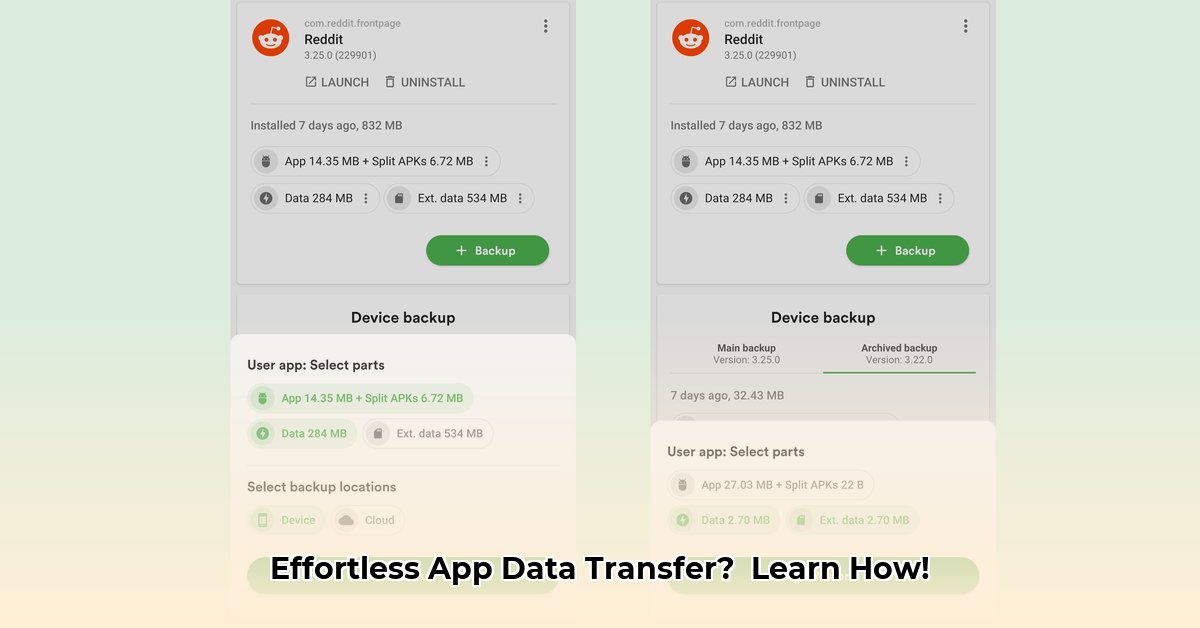
Switching phones or tablets shouldn't mean losing your precious app data. This guide uses the Swift Backup change log to help you smoothly transfer your information, minimizing hassle and maximizing peace of mind. We'll walk you through the process step-by-step, troubleshoot common problems, and even explore alternatives.
The Challenges of Mobile App Data Migration
Migrating your digital life from one device to another is a common pain point. Not all apps play nicely with standard backup systems; some use cloud storage, others don't, and some only partially support backups. This inconsistency makes the transfer process complex and prone to data loss. Swift Backup offers a solution, but understanding its capabilities and limitations is crucial for a successful transfer.
Your Step-by-Step Guide to Swift Backup
Swift Backup simplifies the process; however, always use the latest version to leverage the bug fixes and improvements detailed in the change log.
Step 1: Backing Up Your Data (Estimated Time: 5-30 minutes depending on app data size):
- Open Swift Backup on your source device.
- Select the apps you want to back up. Carefully review the list; don't miss any essential apps.
- Choose a save location: iCloud (convenient but limited by storage), or your device's internal storage (more space but requires manual transfer).
- Initiate the backup process. Larger apps and more data will take longer.
Step 2: Transferring Your Backup File (Estimated Time: 1-5 minutes depending on file size and transfer method):
- Transfer the backup file to your new device. Options include: AirDrop (fastest if both devices support it), email (suitable for smaller files), or a cloud service (Google Drive, Dropbox, etc.). Remember to choose a method appropriate to your backup file size. Is it faster to use AirDrop or a cloud service for large files?
Step 3: Restoring Your Apps and Data (Estimated Time: 5-20 minutes depending on app data size):
- Install Swift Backup on your new device.
- Locate the transferred backup file.
- Select the file and choose the apps you want to restore.
- Begin the restore. After completion, verify all your data is correctly restored.
Troubleshooting Common Swift Backup Issues
Even with careful execution, problems can arise. Here's how to address common issues:
Incomplete Backups: If an app isn't fully backed up, check the Swift Backup change log for known issues with that app or version. If a workaround isn't available, try backing up the app again. If the problem persists, contact the app developer. Don’t overlook this troubleshooting step!
Data Loss: Prevent data loss by creating multiple backups. For large transfers, a wired connection is generally faster and more reliable than Wi-Fi. How can multiple backups improve the resilience of your data?
Security Concerns: Use strong passwords, enable device encryption, and always download Swift Backup only from official app stores. Regular checks of the change log will also alert you to security updates.
Alternative Backup Methods: A Comparison
Swift Backup isn't your only option. Explore alternatives and choose the best fit for your needs and technical comfort level.
| Method | Advantages | Disadvantages |
|---|---|---|
| iCloud Backup | Simple, integrated into iOS. | Limited compatibility, storage limitations. |
| iTunes/Finder Backup | Reliable, handles many apps. | Requires a computer. |
| Other Backup Applications | Special features, tailored to your needs. | Compatibility issues possible, potential cost. |
App Compatibility: Navigating Inconsistent Data Handling
App developers determine how their apps handle data transfers. While Swift Backup strives for compatibility, some apps may not transfer data flawlessly. Check the Swift Backup change log for known compatibility issues.
Conclusion: Choosing the Right Path for Your Data
Transferring app data can be complex, but a well-planned approach using a tool like Swift Backup—in conjunction with understanding its change log – can significantly reduce the challenges. Remember to consider alternatives, prioritize data security, and know that even the best tools might not handle every app perfectly. This is why regularly checking the Swift Backup change log is essential for staying informed and ensuring the safety of your digital assets.
⭐⭐⭐⭐☆ (4.8)
Download via Link 1
Download via Link 2
Last updated: Friday, May 23, 2025